

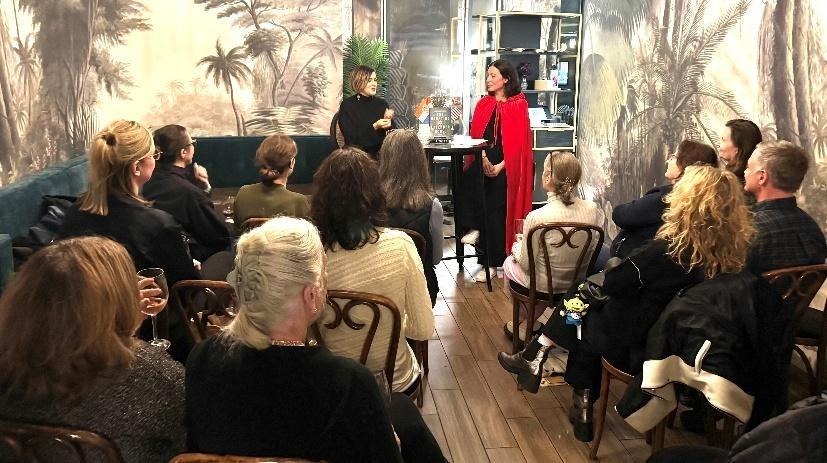
Combining the passion, talent and Croatian determination can undoubtedly result in a great outcome. That spirit was on full display at this year’s opening event of the Boston Croatian Chats Series, celebrating the launch of Natalie Kikić’s novel The Haunting of Lavender House. Organized by the New England Friends of Croatia – a non-profit founded in 1992 to connect local Croatians and friends with the Domovina – the evening brought the community together to celebrate a fellow Croatian creative and honor shared culture, history, and language. The book is based on a fictional island of Tolba and is an exploration of Adriatic culture, myths and folklore, and due to its Gothic romance genre, the pre-Halloween gathering set the perfect mood.
This Chat was led by Andrea Katić Bruno, Educational Director of the Croatian School of Boston, who holds a master’s degree from the University of Zagreb and works as an ELL teacher in Massachusetts. With her deep background in Croatian culture and literature, Andrea brought a rich, personal perspective to the discussion on folklore, history, and the shadows of the Adriatic coast. She introduced the book as a “haunting story that brings together sunlit lavender fields, generational curses, traditional herbal remedies, and the eerie presence of the ‘Mora’, a nightmare spirit deeply rooted in Croatian folklore.”
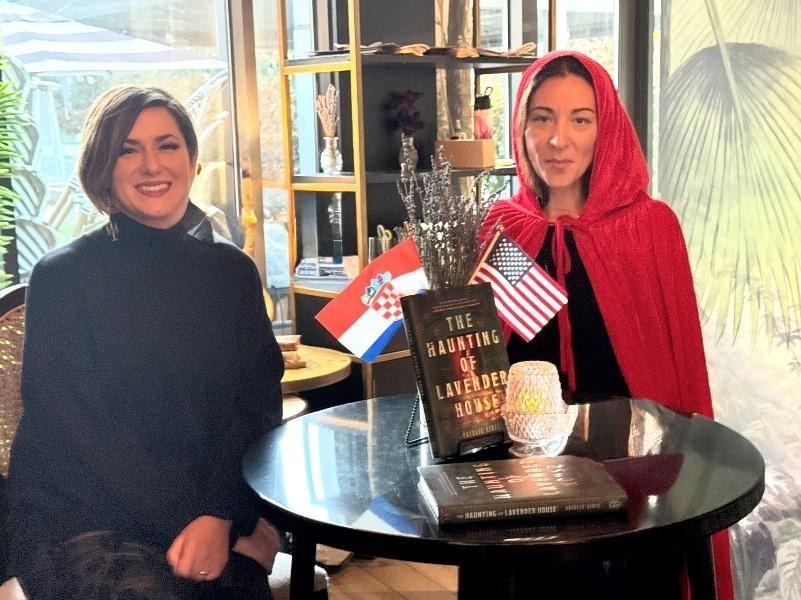
Celebrating Croatian Diaspora, Heritage and Identity
The book is published by Park Row, HarperCollins and can be found HERE. The story line centers around two women in different centuries and includes a theme of diaspora grief and searching for identity. The main protagonist Petra, lives in today’s America and seeks family roots she never knew. Magdalena, a character from 1895, was a local herbal healer who was ostracized by the local community. The book explores among other things a connection in their personal journeys across more than a century.
Kikić was “heavily inspired by my experience as a daughter of immigrants and Croatian folklore. The story is set on a fictional Croatian island named Tolba, which is based on my dad’s home island of Olib and Hvar, famous for lavender production. The protagonist, Petra, is Croatian American like me, and throughout the story, she hopes to connect with her Croatian heritage. I also researched and incorporated Croatian folklore into the haunting elements of the story, and I believe my novel is a great way for modern readers to connect with Croatian culture.”
Traditional Food and Wine Culture
The book includes the inevitable elements of everyday Croatian culture, including celebration of traditional food where deserts like “kroštule” and “breskvice” are mentioned, as well as the presence of wine. The literary evening took place in the Margeaux Supper Parlor restaurant in Cambridge, where the Croatian food theme intertwined with Halloween, including the black risotto as an inspiration for the Cursed Risotto, sheep’s cheese as a homage to the islands, and Croatian wine, including Babić, a variety from Dalmatia.
Growing Boston Croatian Community
Kikić, who is of Croatian and American heritage, is an exciting new voice within Greater Boston’s expanding Croatian diaspora. Attendees included local Bostonians as well as guests who traveled from Western Massachusetts, Connecticut, and even North Carolina. The conversation ranged from historical research to the immigrant experience of navigating dual identities across generations.
All friends of Croatia are warmly invited to connect with the New England Friends of Croatia by subscribing to our newsletter, attending upcoming events, or reaching out directly at info@friendsofcroatia.org.
Author: Mirena Bagur, president of the New England Friends of Croatia, board member at National Federation of Croatian Americans Cultural Foundation, and co-founder of Croatian Premium Wine Imports, Inc.